Monday, March 29, 2010

Suben 16% el precio de los medicamentos/16% increase in medicine

buzz this
Spanish - English Translation/courtesy of Professor Winn

The good professor also translates Spanish, French, and Portuguese to English.

The following article from Argentine medical blog, BlogSalud (HealthBlog), always is a good read to keep up to date on medical issues and terminology. It is well-written and well-respected. The cost of medical care and medicine continue to affect developed and developing countries alike.

Suben 16% el precio de los medicamentos
16% increase in medicine


Laboratorios logran venia de Moreno y suben 16% el precio de los medicamentos
Laboratories get Moreno’s permission and raise the price of medicine by 16%


El incremento previsto para 2010 se llevará a cabo en tres etapas. Algunas firmas ya pusieron en marcha la primera, con alzas del 6%. El resto sería en julio y octubre.
The expected increase for 2010 will come in three steps. Some companies have already taken the first with a 6% rise. The rest would come in July and October.

La novela por el aumento de las cuotas de la medicina prepaga todavía está lejos de llegar a su fin, aunque por si le faltara algún condimento al segmento de la salud, ahora apareció una nueva disputa.
The saga of increased costs of prepaid medicine is far from over, as if the health sector needed a new dispute.

Los laboratorios comenzaron –y con éxito– una rueda de negociaciones con el secretario de Comercio Interior, Guillermo Moreno, que les permitirá incrementar los precios de sus medicamentos un promedio del 16 por ciento.
Laboratories began – with success – a round of negotiations with Interior Commerce Minister Guillermo Moreno allows increases in the prices of medicine by an average of 16 percent.
***
If you are in São Paulo and need English lessons, or Elite English Services including translations (Spanish/French/Portuguese to English), please call Professor Winn at 6214-1511 or send an email to mrenglish101@gmail.com for a prompt evaluation.

Buy your English-language texts today!

Sunday, March 28, 2010

Using Literature in the ESL Classroom

buzz this
If, as C.S. Lewis once said, literature "irrigates the desert that our lives have already begun,"  then literature has a central role to add spice to your ESL lesson plans.

If you are searching for authentic texts to enliven your discussions with upper level students or to debate topics germane to our daily lives, literature in English (bias toward American) is an excellent way.

The inspiration for this post came after wanting to learn how I could incorporate literature fearing it would be too dense or above the level of non-native speakers. Rubbish!

"Literature in the ESL Classroom" by Sandra Mckay offers great suggestions like focusing on language use and aesthetic reading - where the reader relates his or her real world experiences to the text.

The big key? Selection of an adequate text.

I have chosen Nathaniel Hawthorne's "Rappaccini's Daughter" to compile an extract for my classes. Of course we do not have time to read the entire "short" story. I remember Beatrice, Giovanni, and Drs. Rappaccini and Baglioni from my own English class in high school.

How have you used literature in your classes? Did the students like your selections? I will update you when I use mine in the classroom.
***
If you are in São Paulo and need English lessons, or Elite English Services including translations (Spanish/French/Portuguese to English), please call Professor Winn at 6214-1511 or send an email to mrenglish101@gmail.com for a prompt evaluation.

Buy your English-language texts today!

Tuesday, March 16, 2010

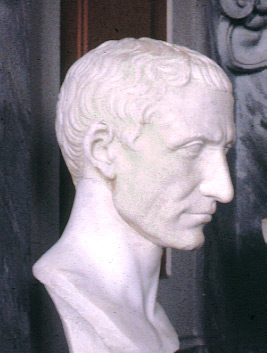
Another Caesarian expression in English

buzz this
Before the Ides of March, circa 44BC, Caesar engendered the wrath of Roman senators because of his military conquests, and resulting fame and fortune. 

In 49 BC, his popularity rivaled the Senate and many feared a dictatorship Roman law prohibited a general to cross the Rubicon River (a mere stream) in northern Italy with a standing army.

After pondering and rejecting Senate demands to cease and desist, Caesar reportedly uttered "the die is cast" and crossed the Rubicon and later seized Rome.

Thus the two expressions are in English till today:

1) the die is cast - a decision has been made that cannot be altered and fate will decide the consequences.
2) to cross the Rubicon - to go forward with not point of return.
***
If you are in São Paulo and need English lessons, or Elite English Services including translations (Spanish/French/Portuguese to English), please call Professor Winn at 6214-1511 or send an email to mrenglish101@gmail.com for a prompt evaluation.

Buy your English-language texts today!